
How Wind Ratings Reveal Australia’s Hidden Home Vulnerabilities
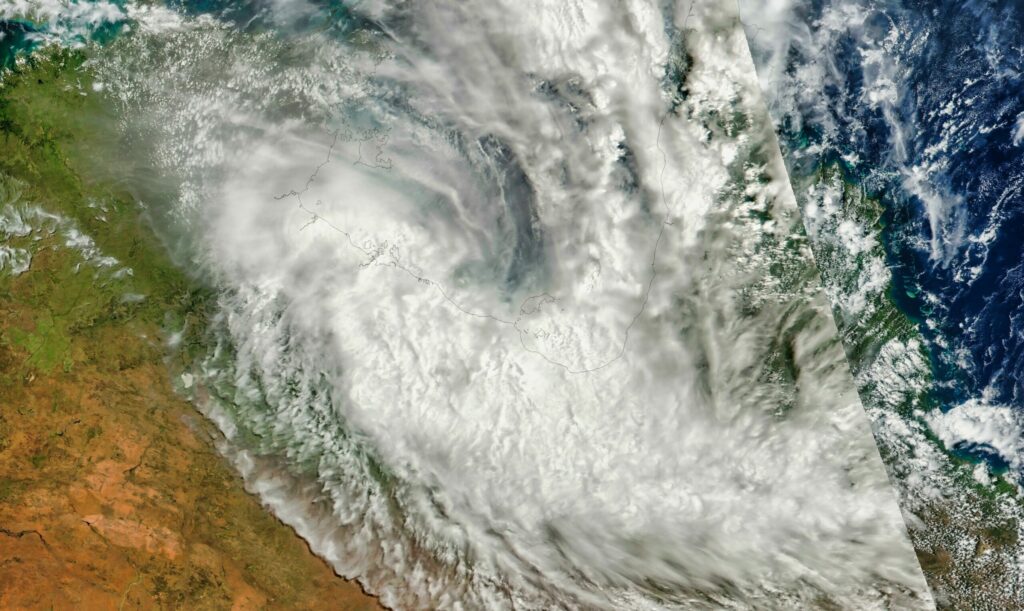
When Tropical Cyclone Alfred threatened southern Queensland and northern New South Wales in early March 2025, it sparked discussion about regional building standards, wind classifications, and home resilience, with particular focus on the structural differences between homes in Far North Queensland versus Southeast Queensland and their ability to withstand high winds.
In the wake of the cyclone, there are now calls to cyclone-proof homes as far south as northern NSW. FNQ residents, accustomed to frequent cyclones, may feel more prepared and view their homes as more resilient. But, even for those experienced with cyclones, understanding wind classifications, building resilience, and safety standards remains important for protecting property and lives.
We spoke with Rohan Madathanapalli, Business Development Manager and Technical Consultant for Bondor Metecno Group about understanding cyclone wind classifications and building codes. Norfoam is a member of the Bondor Metecno Group, Australia’s largest manufacturer of insulated panels, combining global expertise with a focus on North Queensland’s unique needs.
Can you explain Australia's wind classification system?
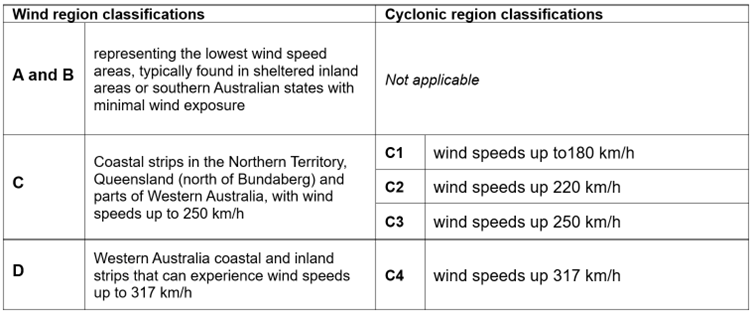
Wind classifications in Australia are a system used to indicate the design wind speed that buildings must withstand based on their geographical location and site conditions. They are categorised into wind regions and cyclonic regions classification systems that guide building design across Australia.
The key difference in classification is that wind regions provide a comprehensive framework while cyclonic regions represent a classification subset focused on cyclone-prone tropical areas.
Wind regions are categorised from A to D based on wind speed and geographical characteristics. Cyclonic regions are in Wind Regions C and D and represent the most extreme wind conditions in Australia, characterised by their vulnerability to tropical cyclones.
At a glance, these are summarised as follows:
Can you explain Australia's wind classification system?
Wind classifications reveals a home’s ability to withstand specific wind speeds, helping homeowners better understand wind resilience.
Wind resilience is fundamentally about creating a continuous, engineered path for wind forces to travel from the roof through the building’s structure and into the ground. This distributes and dissipates wind loads, preventing concentrated stress on any single point that could lead to a home’s structural failure. This approach ensures that when high winds strike, the entire building works as a unified system to resist and transfer those forces safely.
To ensure their home’s wind resilience, homeowners should understand their property’s specific vulnerabilities. They should conduct regular inspections, looking for signs of structural weakness such as rust, loose fixtures, or compromised connections. Homeowners should also secure external attachments like carports and awnings, and where appropriate install cyclone screens on windows.
For those in high-risk areas, consulting a qualified building professional is essential. They can provide detailed advice on upgrading structural elements, strengthening roof connections, bracing walls, and improving door and window frame fixings.
The goal is not just compliance, but creating a home that can withstand the increasing severe weather events driven by climate change.
Can you explain Australia's wind classification system?
- Strengthening door and window frame connections
- Installing impact-resistant screens
- Upgrading locks and hinges
- Sealing potential water entry points
- Repair structural damage
- Maintain your property’s overall condition
How do solar panels affect roofs during a cyclone?
Solar panels can significantly impact a roof’s wind resistance by increasing the surface area exposed to wind, which increases the total wind load on the roof structure, particularly uplift forces.
If solar panels or their mounting systems are not adequately designed, tested and installed, they can become detached during high winds and turn into dangerous wind-borne debris posing a risk to surrounding property and life.
The way solar panels are attached to the roof, to the battens or rafters, influences how wind loads are transferred to the underlying roof structure. Proper installation is key to circumventing any issues that may arise in cyclonic conditions.
What do builders, designers and architects need to know about wind classifications?
For builders, designers, and architects, the process begins with accurately determining the site-specific wind classification using Australian Standards AS 4055 and AS NZS 1170.2, carefully considering all environmental factors that could influence wind loads.
They must determine site-specific wind ratings, design code-compliant structures, and ensure strong resilience. This includes using wind-rated products, creating continuous load paths, and balancing performance with safety.
Builders should continuously update their knowledge of building codes, consult with structural engineers on complex designs, and stay ahead of evolving environmental challenges. This means understanding not just current standards, but anticipating future resilience requirements driven by climate change and increasingly severe weather events.
When specifying building products, builders should adopt a holistic approach that considers not just wind resistance, but also thermal performance, fire safety, acoustic requirements, material durability, and long-term environmental compatibility.
This ensures the entire building system works together seamlessly to provide comprehensive protection and performance.
What products does Bondor Metecno offer that are appropriate for achieving optimal cyclone ratings?
Bondor Metecno offers several insulated sandwich panels designed for cyclonic regions:
Nordeck® Insulated Roofing Panel – the original Nth Qld insulated panel with EPS FR core, long spanning suitable for residential and commercial applications. Tried and test for use in cyclonic regions
SolarSpan® Insulated Roof Panel – long-spanning roofing panel with an EPS FR core suitable for residential and commercial use, and tested for cyclonic regions
InsulRoof® Next Gen Corro Roof – Roofing panel with corrugated profile, EPS FR core suitable for residential applications and tested in cyclonic region
MetecnoSpan®PIR Roofing – panel with PIR (polyisocyanurate) core, suitable for commercial applications and tested for cyclonic wind regions
These panels are designed for homes and buildings in cyclone-prone areas, are tested to withstand high wind loads and comply with National Construction Code requirements.
They have been developed in collaboration with Cyclone Testing Station at James Cook University in Central Queensland and are recommended for use in Wind Regions C and D.
How do you test Bondor Metecno panels for cyclone ratings?
Panels are tested using the “Low, High, Low” cyclic testing method to validate their ability to withstand cyclonic conditions. The testing process goes far beyond simple stress evaluation.
The methodology involves subjecting panel assemblies to a carefully designed series of pressure cycles that simulate the complex wind loads experienced during a cyclone. This involves thousands of cycles at lower pressure levels, followed by hundreds at medium pressure, and concluding with a smaller number of high-intensity cycles. Each stage is monitored for potential failure indicators such as fastener pull-up, skin wrinkling, core shear, and joint failure.
This rigorous testing demonstrates that a panel system can endure both fatigue and ultimate wind loads while maintaining its critical load-carrying capacity. These tests give builders, architects, and homeowners confidence in a product’s performance under extreme environmental conditions.
Bondor Metecno’s panels are tested at the Cyclone Testing Station at James Cook University in Townsville, as well as at our own NATA (National Association of Testing Authorities) test facility at Acacia Ridge in Brisbane.
Talk to Norfoam’s technical team for wind classification advice
Norfoam is North Queensland’s only locally based manufacturer of insulated sandwich panels. We have decades of experience providing products designed to withstand the North Queensland climate.
We are a member of the Bondor Metecno Group, Australia’s largest manufacturer of CodeMark and FM-accredited insulated roofing and walling panels. With distinct core materials available to address any performance requirement across fire, thermal and long spans, our products are designed to suit Australian conditions and Australian Standards of construction.
For specific guidance on selecting wind-rated products that meet Australian building codes and wind classification requirements, contact us today for expert advice tailored to your specific project and environmental conditions.